The Alchemist, Jimmer Fredette Stars on the Latest SLAM ICONS Cover
Jimmer Fredette was a cultural force that gathered steam at the dawn of social media. In the early days of Twitter, posts showcasing his long-distance missiles only required two words for their captions: THE JIMMER.
His run in 2011 sent basketball fans around the country into a frenzy. He was one of the people responsible for stretching the conventional shape of the game. After his emergence, it wouldn’t be long until the days of a packed paint with four big men would have to adjust to a faster, more open style of play. Jimmer served as a bridge between the mid-2000s All-Star in Washington DC and, up to that point, the yet-to-dominate point guards that eventually made their names known in Golden State and Portland. Without Jimmer, the collective basketball imagination wouldn’t have been able to progress to a world full of threes.
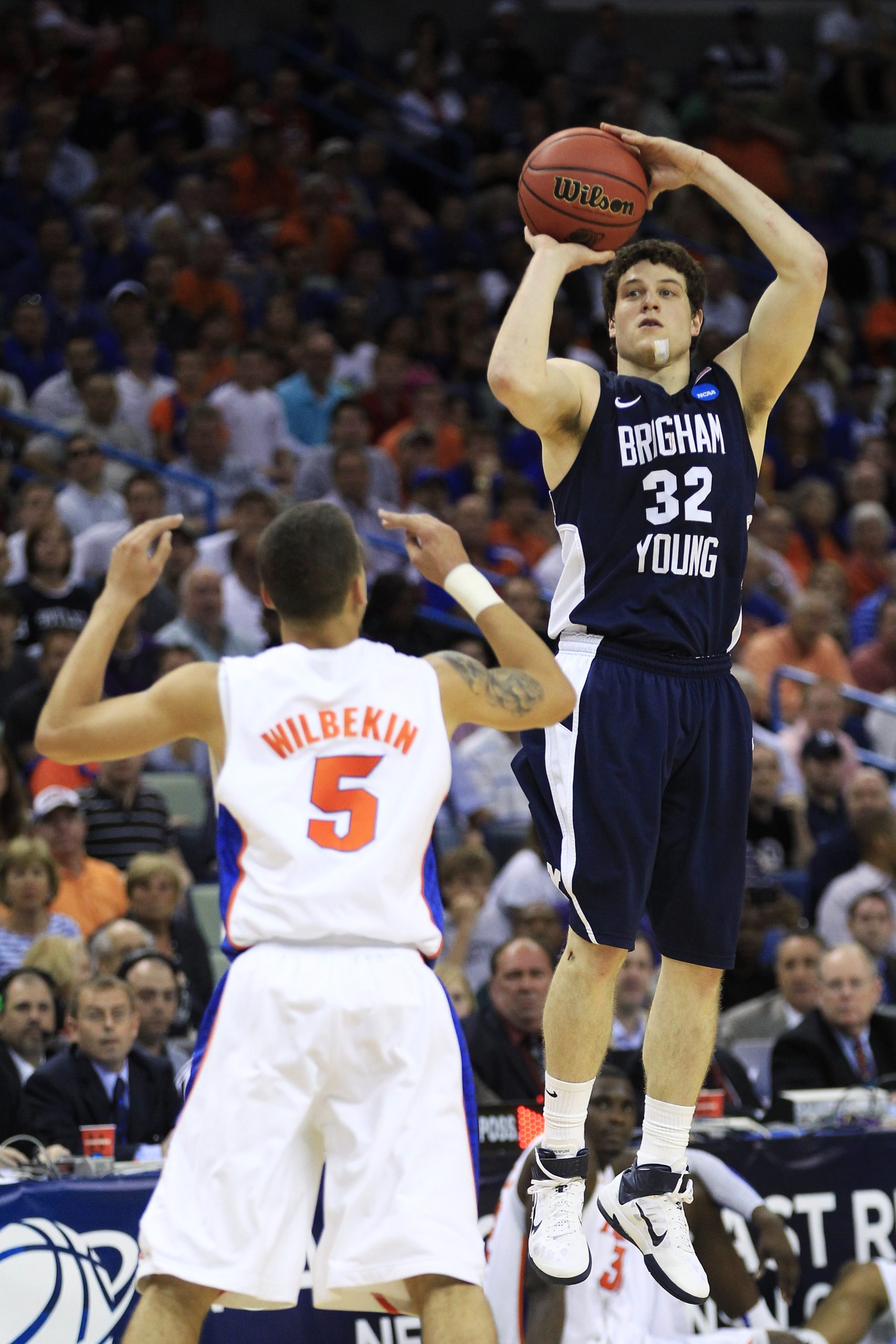
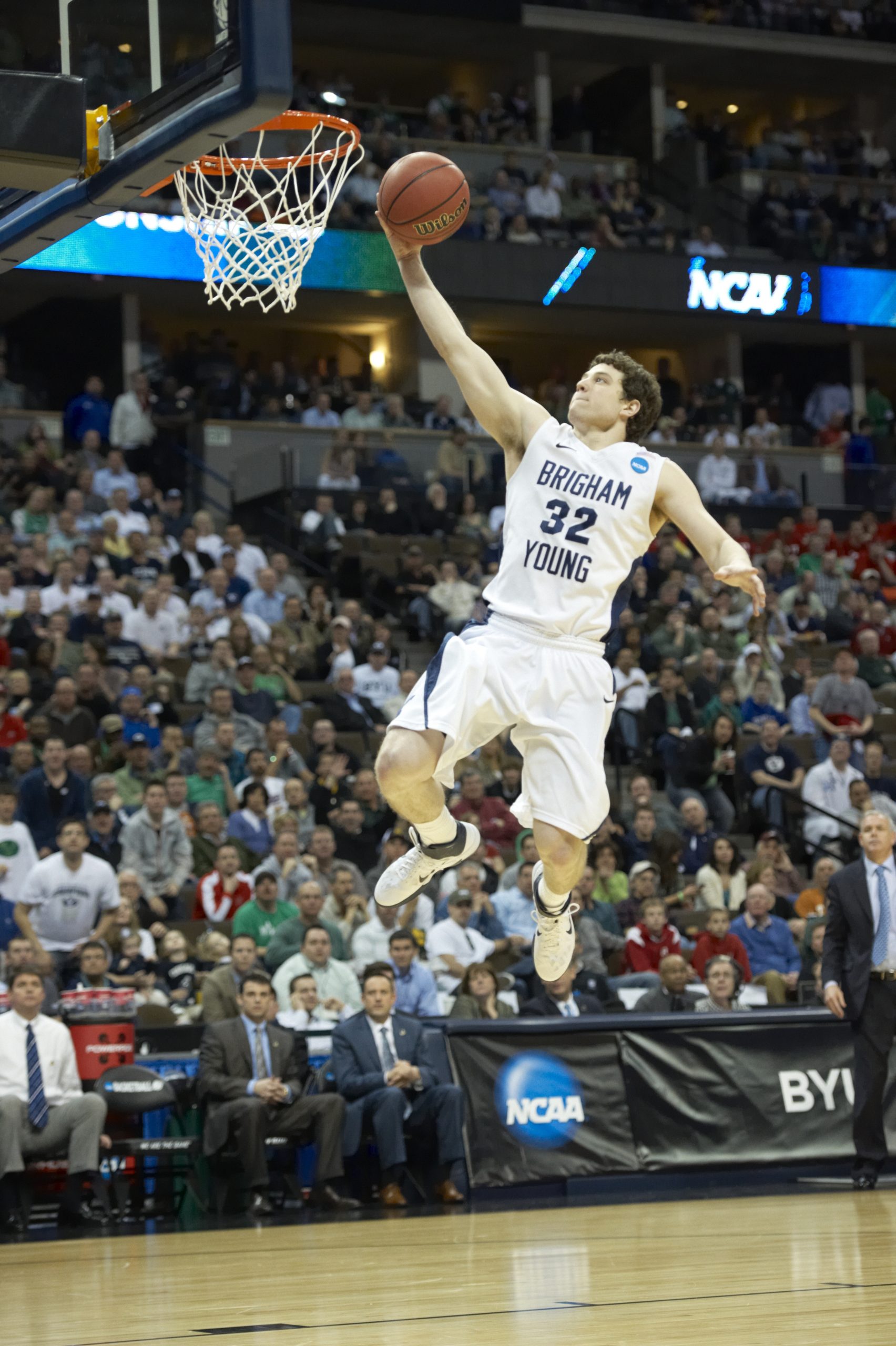
Fredette came along at just the right time. As mentioned, social media was just pulling the masses into its vice grip. But, at the same time, SportsCenter still had a massive influence. ESPN featured Jimmer nonstop. Producers smartly noticed that No. 32 had something special. He was a scoring machine of the highest order. Not only could he connect from deep, but he could get downhill and finish through contact. He also had a shimmy to his game that nobody could figure out. As a senior, he led the nation in total points scored and points per game.

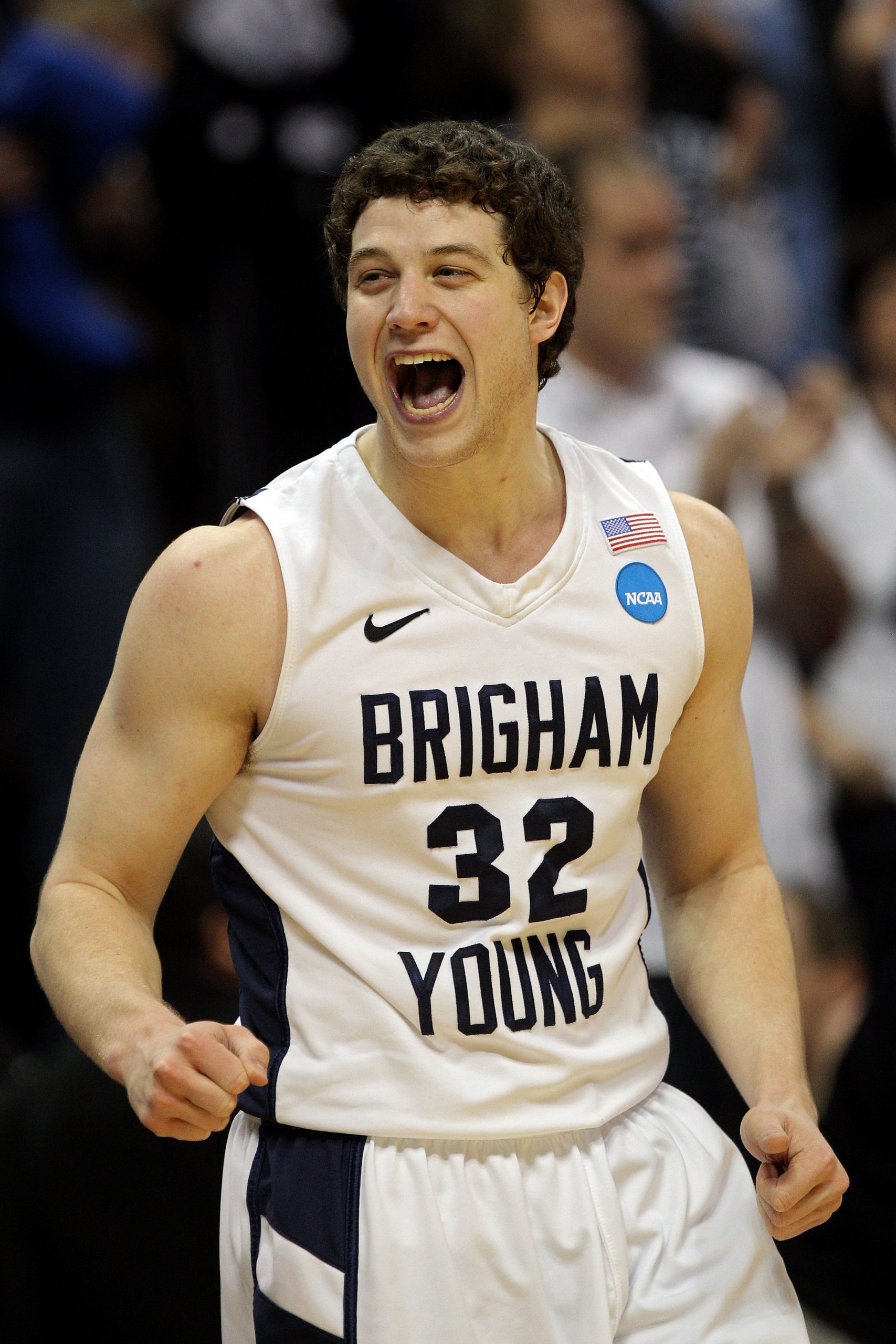
With the broadcasters and the bloggers behind him, Jimmer became a national figure. The whole country watched him guide BYU to the 2011 Sweet 16. The Cougars finished the season at 32-5 and Fredette averaged 28.9 ppg.
But more than the numbers can illustrate, Fredette helped to rewrite outer range. He was a change agent, and the traces of his buckets are still visible in the game today.
Just two weeks ahead of BYU raising No. 32 to the rafters, we caught up with Jimmer to talk about his legacy, his jumpshot, his memories of BYU and just how he became one of the most iconic players in NCAA history.
SLAM: Your work ethic very quickly became famous, and we know a lot about your brother working you out and your sister rebounding for you. There are some stories about this, like, chain that was hung up in your living room that you would swing from. We bring all this up because we’re really interested in what actually happened as a child for you to dedicate yourself so fully to basketball. We’re really interested in all the hours that it took to become Jimmer Fredette.
Jimmer Fredette: Yeah, it’s interesting. It’s a great point. It’s one of those things where my mom and dad were both athletic, and my mom was also very creative, and we didn’t have a big house or anything like that. We had a pretty small house, and we’re growing up in upstate New York, right? So it’s during the winter, I mean, for 6 months, you can’t go outside and play basketball, right? You’re pretty much kind of stuck in your house, and it’s dark, there’s not a whole lot going on, and my mom was like, Well, we gotta keep these kids occupied somehow. So she did all this random stuff. She put a chain, bolted a chain to the ceiling and then the ring on it, so I could swing around, because I was very active, and she’s like, I don’t know what to to do with you. I ended up going through the wall with that chain. It was hilarious. We still have that dent there.
But we always had these little mini hoops in our house, and my brother would go down there and play with me on the mini hoops. He’d be on his knees and I’d be playing against him because he was so much bigger than me, and he’d push me around, swat me, all those types of things. He loved basketball. That was his love, and because of that I loved my brother and I wanted to be like him, so I just naturally gravitated toward basketball from a young age. That was something that we really bonded over. It was super fun. He just saw something in me where he’s like, Man, this kid’s competitive, he wants to play, so he just kept inviting me to play whenever he would be out there. So I’d play with a bunch of his older friends. We’d go to Crandall Park and play with all the older guys, and I’d be so much smaller. But we played a 2-3 zone and I’d be up top and, you know, we just kind of worked it out, and I just loved watching the ball go in. Like, I was obsessed with it. Every time I made a shot, I loved it more, and for some reason that was something that I fully gravitated toward. But I was very active—loved sports in general—but basketball, for some reason, was the thing, and that’s what I knew that I wanted to do from a young age.
SLAM: Did that obsession follow anyone else’s makes, or was that just an obsession for you shooting the ball?
JF: I loved watching basketball. I really enjoyed it. Every year they had the state basketball tournament for New York, they would come to my hometown in Glens Falls, and like I said, [it’s a] small town. We had a small local civic center and it was perfect—held about 5-6,000 people and every year the state championships would come. So I literally saw some of the best players ever in high school history, men and women, come through that civic center. Stephon Marbury, Sebastian Telfair, Sue Bird, Tina Charles. Literally some of the best in high school ever came through there and my dad would give me, like, $5 and I’d go there and the games would start at 9:00 a.m. and they’d finish at about 9:00 p.m. And I would sit there the whole day and watch by myself, and with the $5 I’d go get a piece of pizza and nachos in between. Then I [would] just literally just sit there and watch, because I loved watching the game of basketball live, and I loved watching the ball go in. It was just really fun for me. I just enjoyed it. So anytime a basketball game was on, I watched. Obviously myself, I wanted to practice, but I was a student of the game without even really, like, diagnosing things. It was just more of, I was just watching games and I was picking stuff up while I was watching games.
SLAM: You’ve mentioned a lot of your family. Famously, your brother drafted a contract for you that you signed as a teenager. A contract that committed you to work hard enough to make the NBA. The 19th anniversary of that contract was three days ago. Did you realize that?
JF: I didn’t even realize that. That’s crazy.
SLAM: Did your reality change in a major way after signing that? Did it go from just watching Tina Charles and Stephon Marbury for fun to then becoming a job right away?
JF: No, it never, ever felt like a job until it became a job. That was a big deal, to be honest with you, for me, because I was playing it because I absolutely loved it. Like, I played it because I loved it and then I wanted to get better. I had an internal drive to be able to get better, and I feel like if it does feel like it is a job early, you know, it can get hard quick, because there’s so much stuff that goes around it besides just the game of basketball and the love of it. So I always tell kids, It has to come from you. If you want to be the best that you can be, it has to come from you. And that’s one thing, you know, for myself, like, I was the one that was always like, Hey TJ, hey, hey Dad, hey Mom, can you come rebound for me? And the great ones, you know, the best NBA players, it’s all internal. They have high expectations from themselves. They’re gonna go out there and do it themselves because they feel like they can get better. So that was the thing. I did it because I loved it.
SLAM: Are there examples of what a typical workout would have looked like for you when it was still just fun and just the childhood dream?
JF: Yeah, I was really, really focused in on, OK, what type of shots am I actually getting in the game? That was a big focus of mine, because there’s a lot of kids who go out there and they kind of just practice to practice. But I was very much in the mindset of, If I’m gonna practice, I wanna practice like I play. And where am I gonna shoot the shots and what shots am I actually getting, what moves am I actually doing in order to be successful on the court? So I did a lot in transition and I did a lot of ball screens and then I did some coming off of screens, catch and shoot. But I did a lot of ballhandling, like, a lot of ballhandling and doing stuff off of the dribble.
That’s kind of where my game got better and better. I didn’t typically go for longer than an hour. I was never one of those guys who was gonna stay in the gym all day. I was very efficient, but when I was in the gym, I worked as hard as I possibly could. I was sweating. I went game speed at every rep, and then once I got to the game, it felt exactly the way that I was practicing, and I think that was a key to be able to play and practice that way. So once I got in the game, it was completely second nature, and I would do that every single day. I didn’t waiver very much from what I was working on. It was like, This is what I’m doing, this is what I need to get better at for the next six months, and that’s what I did. So that repetition becomes muscle memory, and then that muscle memory goes into the game.
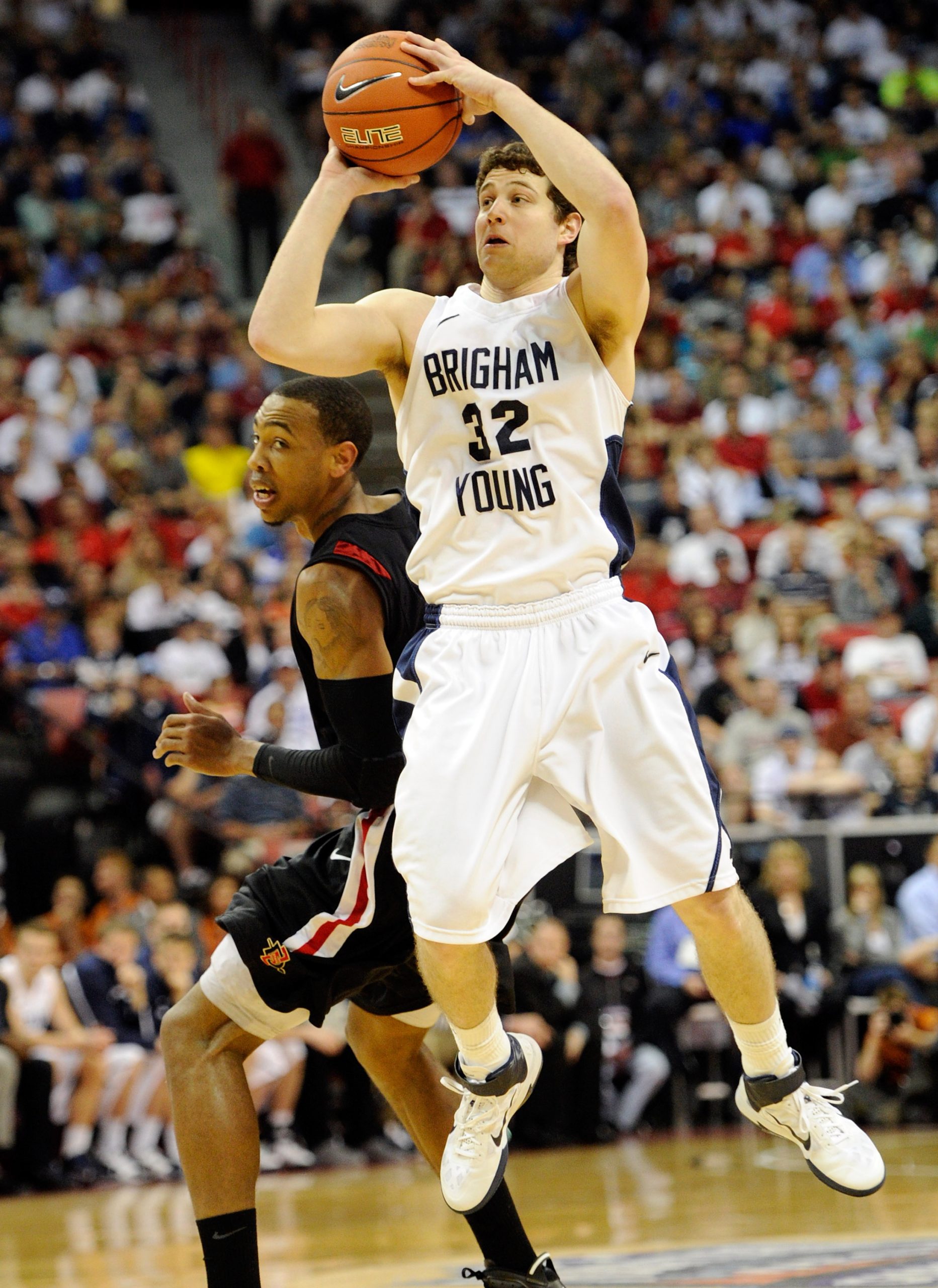
SLAM: We wanted to ask you about muscle memory, specifically your two-handed follow-through on your more stationary shots. Of course there are momentum shots like you mentioned where you gotta get it up quick, but how did your body start to learn about this two-handed follow-through?
JF: Yeah, it was one of those things I learned, obviously when I was younger. I was shooting it kind of from here [Jimmer shows with his hands near his chest—Ed.], you know, because I had to do it, and then once I got to a certain age, I was getting older and stronger. My uncle, who was a good basketball player, was like, Hey, we gotta change your shot a little bit, to get it above your head. So then once I started to get it here in the pocket, and I started to shoot, I would just always guide it up with that hand, and then I would let it go. A lot of times you’ll see guys that’ll just hold it with one hand and shoot it a lot quicker than I would, but I’d guide it up pretty much all the way, and then it kind of looked like, you know, that hand was doing a little bit with it. But I had them both up, and once I found, you know, that specific shot, then it was just about the repetition. For me, it’s important to shoot the same way every time if you can, just because then at that point, if you miss, you know what you did wrong. And I think that’s a big thing, for me, more than anything, if I’m short or I’m left or I’m long or whatever it is. It’s like, well, this is why. This is what I do when I make it, so why did I miss it? You can kind of pinpoint that when you have the same shot every single time. Now that doesn’t mean that when you’re coming off the screen, your shoulder would be turned a little bit more. You can do that as you progress and you get better and better and better, but when you’re younger, you have to have that progression of muscle memory and shooting on balance every single time, and then you can start to do all those off-balance types of things as you get older and get better at it. So I think that was the biggest thing for me. I found that that worked for me and I just kept doing it.
SLAM: What was your tell when you let the ball go? How would you know that a shot was gonna go in?
JF: Oh, I could tell from the release for sure. Like, my follow-through. If my follow-through was good, like, if I could finish my shot and actually get that follow-through and come through and land correctly and I wasn’t pulling it away too quickly, I knew that ball was going in. That was it. If I had a full shot where I was, like, All right, I could line it up, it felt good, and I finished my follow-through, I was like, majority of the time that ball is going in.
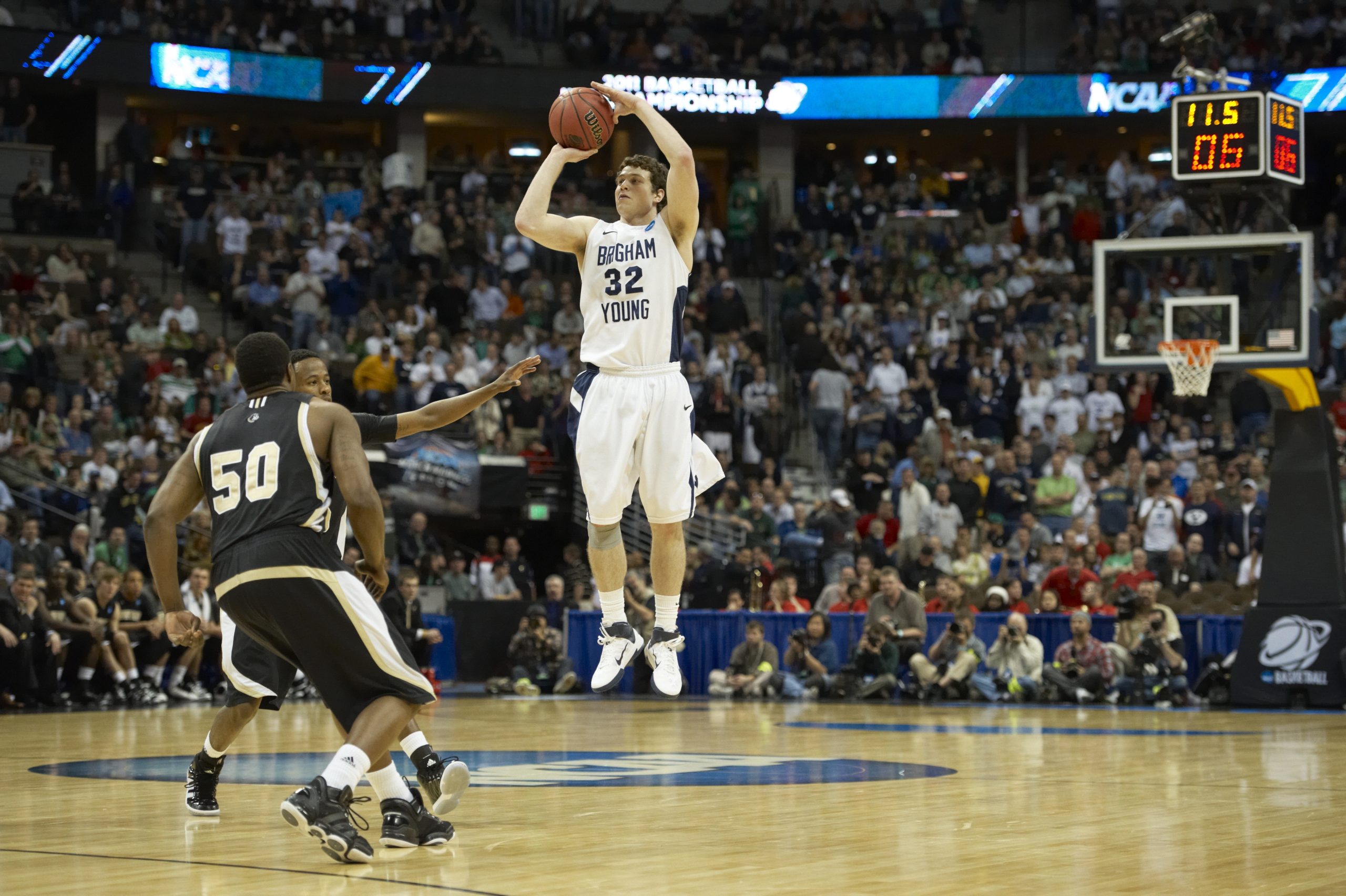
SLAM: Most of the time you were a hop shooter. There were some times when it was a 1-2 release, but then there were also a lot of times where you would get a big on a switch and you would lull them to sleep a little bit and explode up flat-footed. That doesn’t make any sense. Most shooters require momentum. What was your mental checklist for those flat-footed threes?
JF: Yeah, so I was sizing the guy up, right? Like, I’m going and I have him and I’m kind of side-stepping almost a little bit, and then all of a sudden I’m just planting off two feet and jumping straight up, right to my shot, and that was something that’s been worked on a lot by footwork. My uncle Lee [Taft], who was my trainer for my whole life, he was really big on balance, footwork, force into the ground, those types of things. The reason why is I’m going sideways, but then once I get into my shot, I do that hop, so I can hit the ground and actually generate that force and momentum that I needed to get those long shots off, right? If I was just kind of standing there and then just shot it, it would have been harder, it would have been more arm, whereas when I did the hop and I, like, kind of pounced into it, that gave me that leg drive that I needed, that I normally would do when I would shoot my shot.
But I was just sizing the guy up, like, OK, how far is he away? How long are his arms? Am I able to get this shot off? And I’m kind of just sizing up, and as soon as his arms go down or he’s a little bit relaxed, then I’m just getting up as quickly as I possibly could into my shot. And it was just a rhythm thing for me. I did it so many times throughout my career. I’d work on that shot all throughout the summers, and, yeah, it was pretty successful.
SLAM: It was very successful. Obviously it’s very easy to say you were shooting long shots before a lot of other people were. But in our eyes, that’s not the whole story. This two-handed follow-through became really prevalent in the NBA with former Spurs assistant coach Chip Engelland, and Patty Mills and Kawhi Leonard eventually started doing it. And also, it’s become more popular to hunt bigs in switches and shoot threes over them, something you also did. What was your awareness in your place in helping basketball progress and really helping shooting progress. Were you aware of that in college? Were you aware of that in the NBA?
JF: I wasn’t aware of it in college. It was one of those things where I’ve been doing that my whole life. It was kind of funny. I remember when I was in, like, probably in 2nd grade, and we were playing basketball and my dad, we just put a local team together, right? And we went and played the only other local team that had a 2nd grade or a 3rd grade team. The [coach is] like, Yeah, we just started playing, yeah, it’s our first year, too. And then my dad asked the coach, Hey, do you guys count threes? And the guy was like, What do you mean do we count threes? We have kids that can barely shoot to hit the basket. [My dad’s] like, We got a kid that can make threes, and the guy’s like, I guess?…And that kid was me, right? I was shooting from a long distance from a young age, so that was normal and natural for me.
When I got into high school, I was shooting all of those long-range shots, and my coach would let me shoot them because I would make them, but I practiced them all the time. I was like, The bigger guys, if they’re gonna not guard me out here, I’m gonna shoot it and I think I can make it. So then when I got to college, obviously it started to become kind of a phenomenon, especially that 2011 season, and I knew that I was shooting it from far distances and kind of opening the space, and like you said, I wasn’t necessarily the first one to do it, but I do think that I had a little bit to do with the spacing of the floor, because everyone was like, Well, you gotta guard him out there, and obviously Steph [Curry] revolutionized that. He was the guy that really revolutionized that whole thing of, like, wherever he was on the floor, you have to guard him, and it opened up everything for the Golden State Warriors, and then everyone’s like, Well, we gotta play that way.
And it’s funny to me because when you talk to NBA players who know who I was, like, whoever it is, they all were like, Man, you were the thing in college and, like, shot from ridiculous range. They all knew that, they all felt that way. I had many people that are, like, I was saying Jimmer when I was shooting shots in the park and, you know, in my local rec league and stuff like that. If it was a long shot, a lot of people would call it that, right? So I think I had a little bit of help with it. Obviously I wasn’t the main factor, but I think I was part of that revolution of spacing and shooting it from a longer distance and helping your team with the spacing of the floor.
SLAM: Do you have a moment where you felt most in the zone while you were at BYU?
JF: Yeah, for sure. The first time that I ever felt like that, where it was like I kind of had never felt like this before, was my junior year playing against Arizona at Arizona. I had a big game that night, I had 49 points, and I think I hit 10 threes [it was 9—Ed.], and they were good. We were playing at the McKale Center, which is a really difficult place to play. They were top 15 ranked, we were supposed to get beat pretty good. And I came out and, like, the first two shots that I hit, I was like, Oh wow, I feel really good. And then I just kept progressing and kept progressing and all of a sudden, you know, the end of the game, like I said, I had 49 points, the McKale Center record, for an opposing player, and it was the first time where I had felt crazy in the zone, like anything that I was throwing up was going in. And this was against really good players, you know? Derrick Williams, who was the No. 2 draft pick that year, and Kyle Fogg and Solomon [Hill], who was there, and just, like, NBA players, and so I knew at that point, I was like, Man, I got something here. It put me on the map, put BYU on the map at that point, but it was a time where I was, where I felt, like, if the shot didn’t get blocked, it was going in, one of those types of things, and, that was a really cool feeling, and I felt like that, you know, several more times throughout my career. But that was the one specifically where I was like, Oh wow, this is a different feeling than I felt before.
SLAM: Our last one for you, Jimmer, is what does basketball allow you to express that you can’t express with words?
JF: For me, I’m usually a very levelheaded person. People that know me are kind of like, Man, you don’t get too high, don’t get too low, you’re kind of like this kind of even-keeled person, but the thing about it is there’s a real strong desire to compete for me. And I’ve always had that, and that gave me an outlet to really go compete and do something that I love, and I love competing. I would do it with a smile on my face most of the time, so people didn’t think about that, but I loved it. It was an outlet to express myself, to yell at the crowd, to bring myself out of my shell. I was kind of a shy person growing up and, you know, getting on the court, I wasn’t shy at all, and this was who I was, and I was going to express myself and play the game that I love and compete, and then afterward, kind of go back to myself and be able to, you know, be the person I was.
But it definitely gave me an opportunity to really just have fun, compete, get that competitiveness out of me, and then be able to kind of go back to normal life. So, super, super grateful for that opportunity. Obviously, I was able to play at the highest level and compete at the highest level.


Photos via Getty Images.