The Power of a Legend: Cynthia Cooper Details Her Legendary Career
When legends speak, you listen. Watching the game now is always a pleasure, but understanding the game, the League and the culture from the very beginning is necessary.
Too often, we speed past the building stage. People forget the tools it takes to create a sturdy foundation, the sacrifices, the fear of messing up, but also the sweat and tears required to turn raw materials into something that lasts.
Cynthia Cooper, trailblazer, champion and legend of the game, understood the assignment when it came to being a foundation setter. She asked questions, stayed true to her promise of advancing the game and, on top of that, left room for the next generation of players to add their own touch to something already so beautifully created.
SLAM: When you look back at the early days of the WNBA, what things do you remember most vividly?
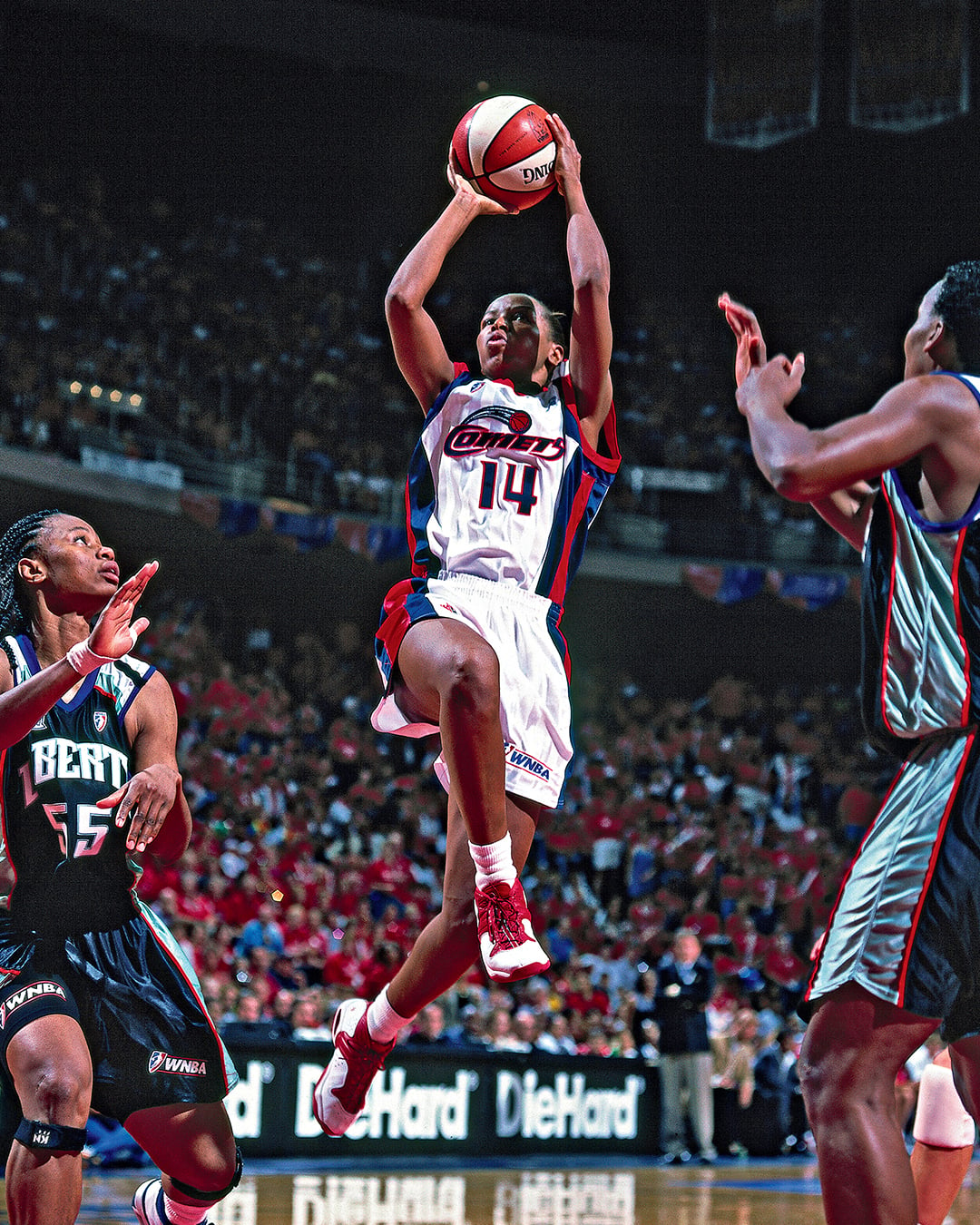
Cynthia Cooper: I remember several things. First, it was all so new to us. I would say the first thing was, appointing eight players to the teams. I remember I didn’t know I was part of the first eight, so I put together this whole package to send to [former WNBA Director of Player Personnel] Renee Brown with my video, my stats and an intro letter that I was going to FedEx to the NBA offices in anticipation that I would be allowed to try out for one of the teams. I remember calling ahead of me sending that package, speaking to Renee Brown, and I was like, “Hey, my name is Cynthia Cooper. I really want an opportunity to play in the WNBA. Can I try out?” She was like, “Cynthia Cooper from Italy?” And I said, “Yes, I really would love the opportunity. I’ve been playing over here.” She’s like, “Oh, you’re part of our top eight. Where do we send a contract?” And I was like, What? But I kept it professional and said, well, you can send a contract to such and such and such in Parma, Italy. I was so excited that I would absolutely have an opportunity to play in the W.
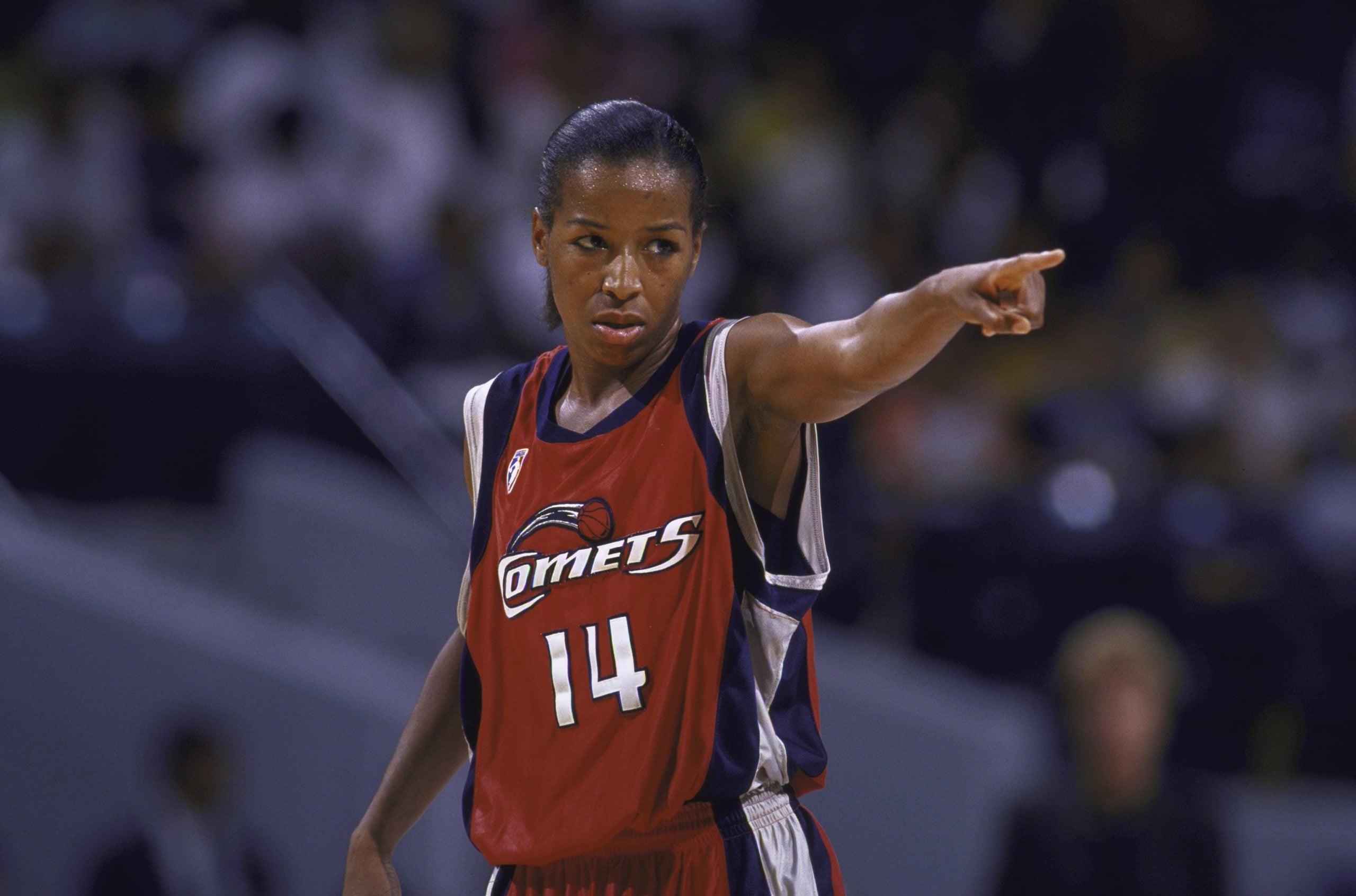
The next thing I remember is they assigned me to Houston, and little did they know I was already living in Houston. I was living in a suburb called Sugar Land and got to town, started doing all of the publicity stuff, and then probably the next thing I remember were the tryouts. The first year we had tryouts to fill in the squad, and so that’s where we got Kim Perrot. We got her out of the tryouts, and she proved to be the floor general and really important in every facet of the success that we enjoyed.
Then the very next thing I remember were the commercial flights that we had to catch, even on back-to-back nights. Like, when we had a back-to-back, we would be up early, or if we had an early game, we would be out that evening flying to our next city and sitting in the airport tired, in sweats, hoodies, listening to music, getting ready for that next battle. So early days were tough, but it was worth it.
SLAM: Back in those first tryouts and early practices, did you already feel like that team had dynasty potential? Or was it more like, OK, let’s just ball?
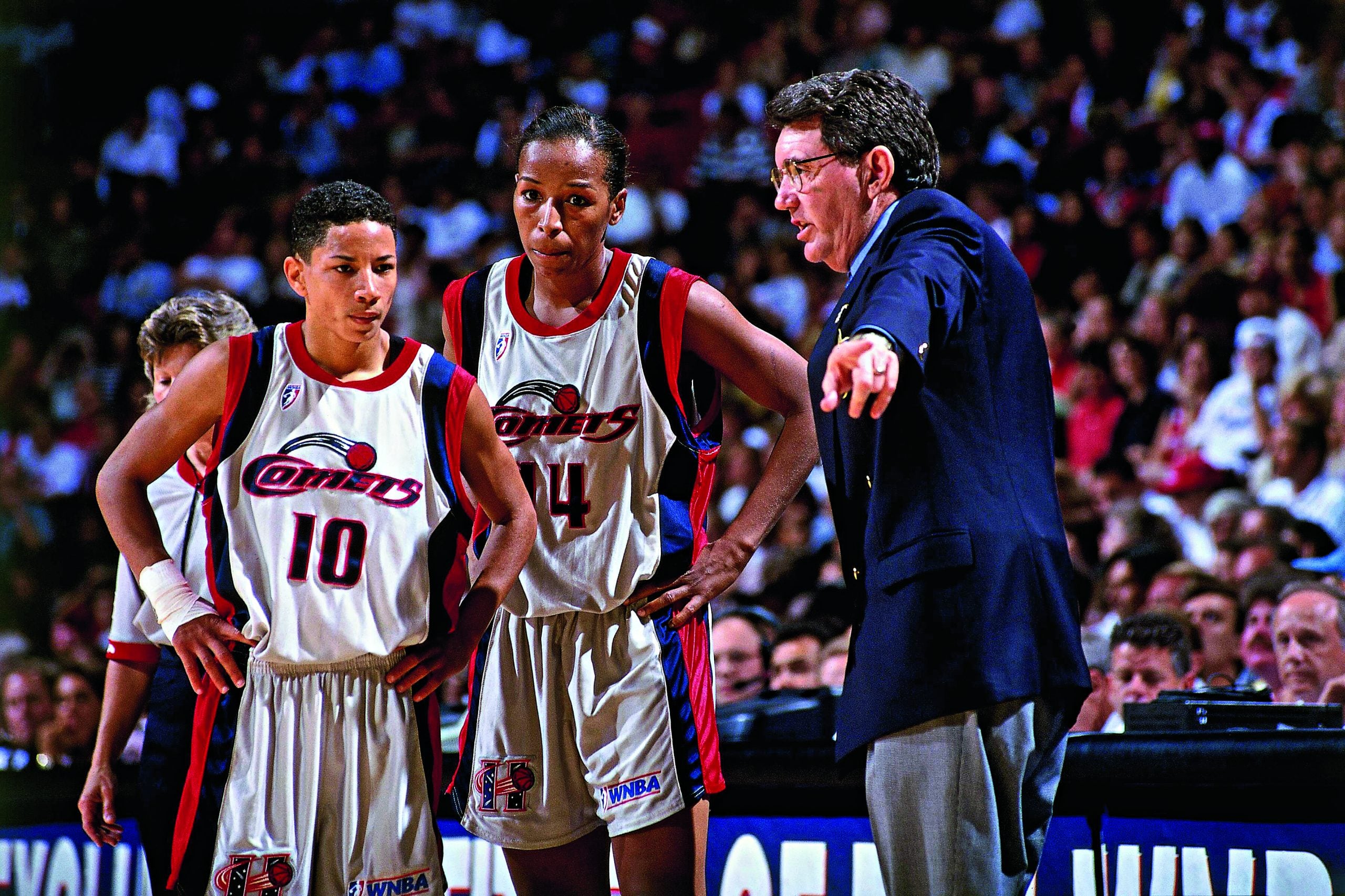
CC: I’m all about putting together the pieces of a puzzle, and so I can’t say that I knew it was going to be a dynasty, but I knew one thing for certain: Kim was a baller. I knew that the WNBA had no real idea of who I was as a player because I had been overseas for 10-11 years. They probably watched some of my videos but didn’t really know me as a player. Then shoot, we got Tina Thompson, first Draft pick ever of the W, and I’m like, Oh, she’s young, she could stretch the floor with that three-point shot, coming off the pick-and-pop as opposed to the pick-and-roll.
So I did see huge potential, but you never know until you jump in with both feet, right? For me it was the first half of the first season that told me, Oh, we got a squad. We can win this. After we had gotten through every team at least once, I was like, We can do this. We got a squad, we just got to dial in now. It’s time to get ready.
SLAM: What was the locker room conversation like during that time?
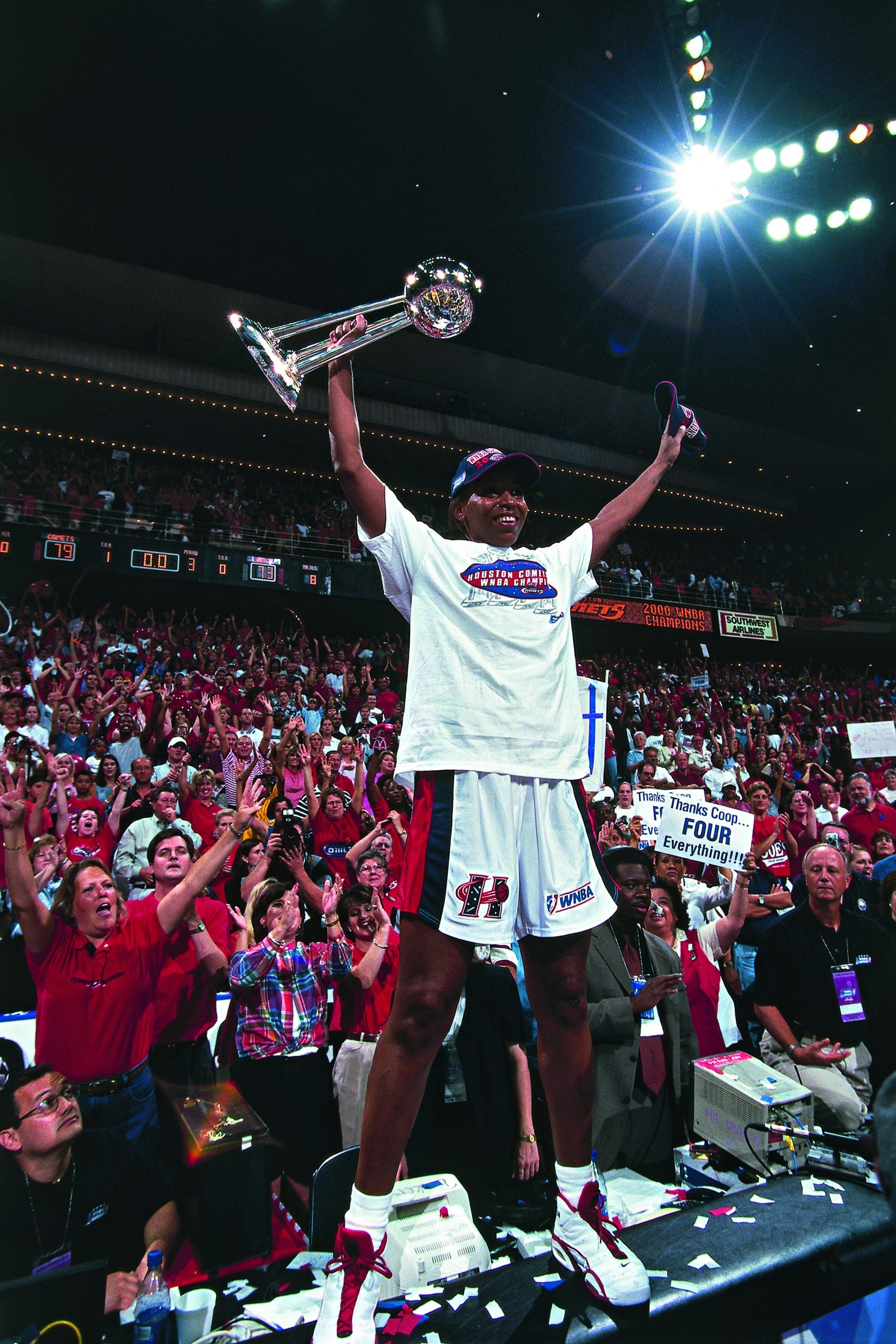
CC: I think the locker room conversation was cautiously optimistic because it’s the first year, you just never know. Some trades are going on, you just never know what’s going to happen. We didn’t know if Sheryl Swoopes was going to come back this year or next year, so there were some question marks for us.
But the locker room was like this: The role players played their role 100 percent, the stars were the stars and they showed up every single game. That’s what you need. That’s the recipe for a championship, everybody giving 100 percent in their role. We had that the first year in Houston, and that’s why we were able to win the championship.
SLAM: What is the best way to navigate finding your role within a team?
CC: One is to be truthful and honest. The coach has to be honest with the player, the player has to be honest with the coach. This is what I’m looking for, this is what we’re looking for, and this is what we need for you to do in order for us to be successful. I think that honesty helps you not just find your role, but then own it and be two feet in and be the best version of yourself every day. That mentality is what led us to a championship because we had our ups and downs, but every player tried to be the best they could be in their role. That role is defined by the coach, defined by the practices and how you perform in practice. Once it’s established, you can’t go outside of that if you want to be a champion.
SLAM: Walk me through your first year and how you were developing your game in the W after being overseas.
CC: I think the one question mark I had in my mind was, could I be as effective in the WNBA playing against athletic and physical Americans? Because overseas there were only two foreign players [Americans] per team, so really your competition came from the other foreigners. So I’m like, OK, now we have a whole team of Americans. Can I be just as effective as I was overseas?
That was kind of the question mark, but like I said, after the first half of the first season, I was ready. I actually called a meeting with Coach [Van] Chancellor and I said, Coach Chancellor, I can give you more if you just let me go. I believe that I can take my game to another level. And he let me go. He gave me the reins.
You have to have those meetings, you have to be honest in those meetings, and then you have to perform. You have to show up every single practice and every single game.
SLAM: Where exactly do you think that mentality came from for you?
CC: I think it came from Watts. It came from growing up in the inner city and never taking anything for granted and always showing up to be your best because if you don’t show up, you can end up in gangs, you can end up involved in drugs, you can end up in places you don’t want to be in.
Growing up, I didn’t have a lot of mentors telling me what I could do, but I had a lot of examples of what I shouldn’t do and the path I shouldn’t travel and the direction I should not go in. I used those things as motivation to stay on the right path to achieve the goals and to achieve the things I wanted to achieve for me.
SLAM: Can you describe a moment where you were choosing between basketball and another path? What was the conversation you were having with yourself?
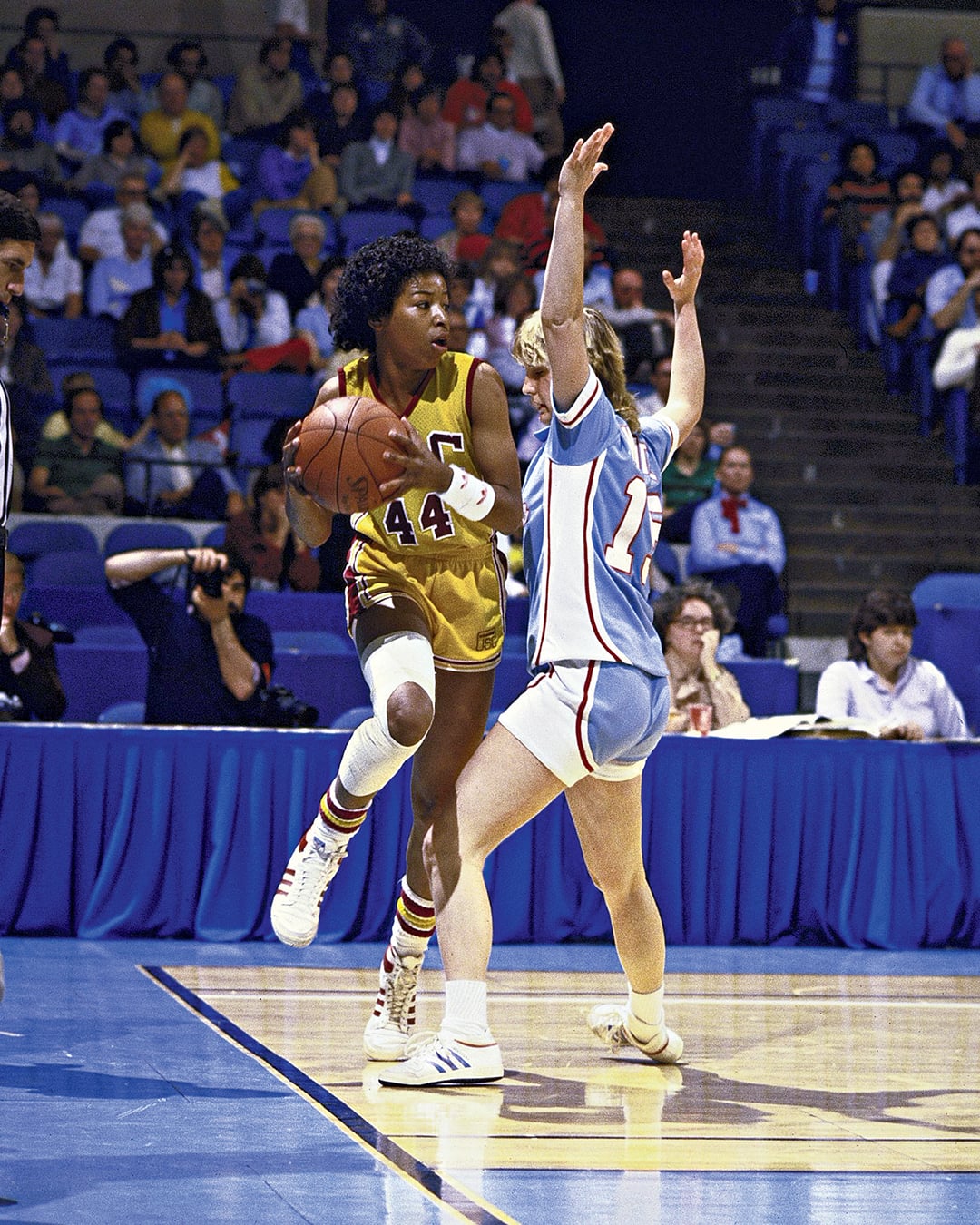
CC: I would say the first thing that came to my mind was when my brother was killed in ’85. He was killed in a gang fight, stabbed, and didn’t make it out of surgery. I had to decide whether I was going to stay in school and play basketball or quit and go work because my mom needed money, my family needed money.
So I quit school and I went to work at First Interstate Bank. Maybe six months into it, my coach Fred Williams came and knocked on my door. Now, I didn’t know at the time that he went to somebody else’s house first and almost got shot. Who goes to the wrong house in Watts?
He ends up making it to my house, knocks on the door and convinces me and my mom to get [me] back in school, come back to USC, finish my degree, finish my time there because that’s what was best for me.
Had Fred Williams and Linda Sharp not done that, had they not come and gotten me and believed in me enough to get me back in school, none of the rest of this happens. No WNBA, no playing overseas, nothing. I end up being another statistic.
SLAM: What does education mean to you? What did that do for your confidence in the classroom and on the court to have somebody say, Hey, we need you and we believe in you beyond a jersey?
CC: It was really a motivating factor when they came to get me and thought that much of me. Growing up in the inner city and going to a private university like USC with such high academic standards, I wasn’t a great student. I needed a lot of work and a lot of help.
When they came and got me back in school, I was motivated. Especially back in the ’80s, you could not play if you didn’t get the grade, period. There was no up and down, you couldn’t go here. You were on probation, and then you were out. Them coming back to get me motivated me to be a better student, a better person, and it really helped cultivate that fight in me because they believed in it, and so I started to believe in it. That is what propelled me onto the scene, both as a player and as a person,
SLAM: What was that conversation like with your mother? Because the grief of a family member, a son and a brother, is deep. And to see what you went on to accomplish, what was the conversation like with her later on?
CC: My mom persevered. She had a tough time growing up and raising eight kids by herself. So just for her to see me get back into school and then everything that happened after that; I go play one year in Spain, then 10 years in Italy, learn a foreign language, come back and play in the WNBA. And my mom was still alive, fighting breast cancer at the time, to see us win the first two championships.
The conversation with my mom [later on] was like, Mommy, if they don’t come back and get me to go back to college, if you don’t feel like that’s a great idea, if I don’t feel like it’s a great opportunity, none of this happens. After our second championship, my mom and I went back to the house while everybody else was partying, and we sat right in front of the TV watching the highlights and coverage and we just shared that moment. It was just a full-circle moment where this is where we were, this is some of the hardships that we had to go through, and look at where we are.
That’s really what I see in the WNBA now, too, 30 seasons later. This is where we were, we had struggles in the middle of that journey, but we fought through it and came out on the other side with this level of success.
SLAM: I think it’s also a full-circle moment to be one of eight from the beginning and one of eight in your career and end up as the first dynasty. That’s a credit to who you are and your story.
CC: I didn’t even think of that. How about that!
SLAM: Now let’s talk about retirement. What was that moment like for you, and how did Houston embrace you in that next chapter?
CC: Yeah, I mean, I love Houston and the city of Houston loves me. I was ready for retirement because I was really ready for a family and to do some other things with my life. So I didn’t regret it. You know, so many people’s retirements are difficult for them now.
I had been playing 11 years overseas, then we had so much success in the W. I felt like I had achieved everything I wanted to achieve in basketball and had done my job laying a foundation for the next generation. I understood the assignment. Jumped in with two feet, and I was ready when it was time to retire. Shoot, I should have played a couple more years. Retirement is about mentally preparing and being ready for what’s next.
I’ve always approached every single thing with the same type of energy. I’m always two feet in—as a player, teammate, mom, wife. I always tried to be the best version of myself. I didn’t split my attention. I would never, you know, be in basketball practice focusing on the family, or [with] the family focusing on basketball. I was always two feet in whenever I was. If I was at basketball practice, I was focused on basketball. If I was with my family, I was focused on family.
SLAM: When you retired, how did you pass the torch?
CC: I don’t know if I saw it that way. My whole mentality was every time I stepped on a court, bring my A game, because there were going to be opportunities when someone was seeing me for the very first time. I wanted them to see the best basketball player they could see.
I felt like that was laying the foundation for women’s basketball and the WNBA. This is what you’re going to see. This is the type of play, the high level of play, that you’re going to experience. I didn’t want them to be disappointed, like, Oh, this is my first time watching Cynthia Cooper and she didn’t live up to the hype. It was disappointing.
For me, it wasn’t about passing a torch to one person, it was passing the torch to a generation. That was my mindset. If you’re watching me, I want you to grow up wanting to play in the WNBA because you saw Cynthia Cooper go all out and win a championship. So it wasn’t about passing the torch to one person. I understood the bigger picture. It was passing the torch to the League.
SLAM: When you look at the League today, how do you feel like the players and the organization have carried that torch forward?
CC: What I love about the W right now is that they were able to grow. We had growing pains right there in the middle, but luckily I retired and I allowed some other people to win championships [chuckles]. I just think the League did a fantastic job. We probably started to grow a little too fast too soon, but they corrected that, took a couple steps backwards just to continue to grow the League.
What I love about the players now is that they’re their own bosses. Like, they are boss women, from the tunnel to the court to podcasts to their social media. They own their own League. They own their growth. They own their success.
SLAM: Are there any players that you’ve seen at the beginning stages of their journey where you were like, Yeah, I knew you had it. What does it take to get that nod from you?
CC: Growth. The one thing about me is, I’ve never arrived. I’ve always tried to continue to get better as a person and as a player. So I would say the same thing for players like A’ja Wilson, when she came into the League to what we see today. Oh my God, next level! She has become such a force, not just on the court, not just off the court, in her locker room.
We talked about this earlier. You’re able to be authentic, and you’re able to be honest to each other. If you see Chelsea Gray is not playing at a high level, not dishing that ball up, you call her on that. And there’s such a level of respect that she’s able to say, You know what, let me go look in the mirror. You’re right, let’s go get better. That’s what teams do. That’s what champions do.
Caitlin Clark, with so much pressure. I watched her in college and every single game there was pressure for her to show up for her team. And guess what? She stepped up to the plate, she owned it, she did it. Pressure coming into the W? She just did nothing but play her game, and she came with it every single night—both with the physical play and with her game, as a facilitator and as a scorer. So you have to take your hat off to a player with that much pressure.
The only other player that has done that, in my opinion, with that level coming right out of high school, was LeBron James. With all of the pressure of being great or “The King,” all of that hype, and you came out and you actually showed up? Man. Come on, that means you’re great. That’s what I think about Caitlin Clark.
Then you have somebody like Angel Reese. Oh, she doesn’t have this skill or that skill, and she just turned every negative comment into a positive. She just went to work, and then she constantly gets better. She’s a double-double machine. She’s making the Atlanta Dream an incredible franchise and an incredible team this year. I just see her with all of the pressure and all of the naysayers and all of the talk around her but she just continues to rise and rise. Cream rises to the top.
I can go on and on, but those three players are the first ones that came to my mind, and I just love what they’re doing—not just for their teams, but for the League.
SLAM: If you could choose one word to describe how you feel about the W right now at this 30-year mark, what would it be?
CC: Talented. Talent comes in a lot of different shapes and sizes. Sometimes talent is the person coming off the bench who’s the glue for your team. Sometimes talent is the All-Star. Sometimes talent is getting in the boardroom and negotiating a new CBA.
From walking the red carpets at the Met Gala to walking the tunnels at the games to negotiating a new CBA to everything that is the future for them. They’re continuing to surprise people and continuing to be great.
Now kids can dream of being a WNBA player, being a success, being a pro. They don’t have to go overseas to play. They can play here in America in front of their family and friends and win championships.
SLAM: Your old team, the Houston Comets, is coming back next year. How do you feel about that?
CC: I’m just overjoyed. It’s such a special moment for me for a lot of different reasons, and so I am so excited. I’m so excited for the city of Houston to get the WNBA back. And now we’re getting a chance to see Stewie and Sabrina from New York. And we’ll get a chance to see A’ja, Chelsea, Jackie Young from the Aces.
We’ll get a chance to see Kelsey Mitchell and Caitlin Clark and Aliyah Boston. We’re going to get those people. We’re going to have them right here in Houston bringing their A-game. They better bring their A-game because the Comets are the Comets. We had a legacy.
But also things like retiring Sheryl Swoopes’ jersey or retiring Tina Thompson’s jersey or Van Chancellor.
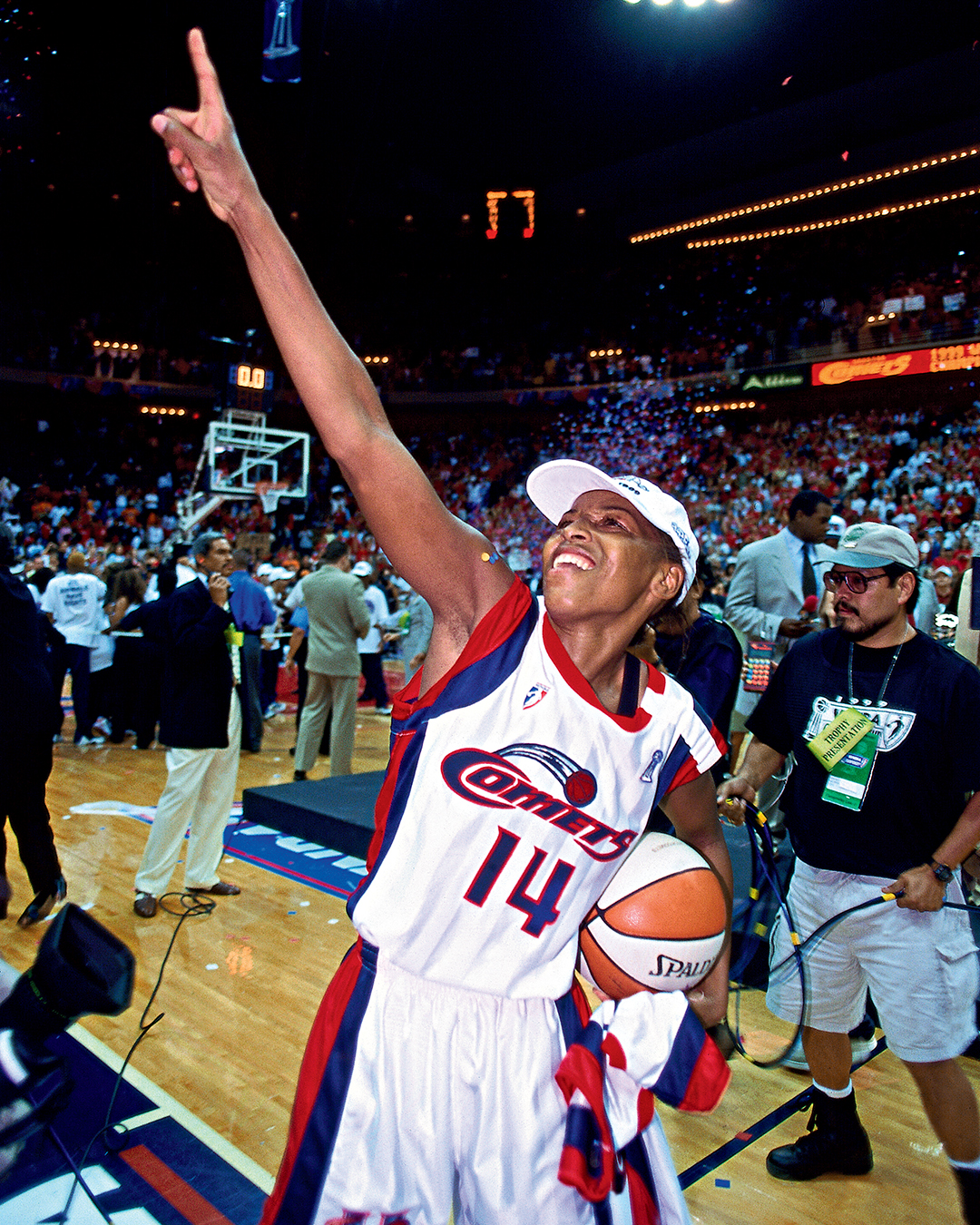
Where are our trophies? Bring them. Let’s go. I want to see all four of them lined up. The first night, the opening night, all four trophies lined up.
As a matter of fact, I’m just going to put this out there. The Houston Comets should give a small toy trophy to every fan for the first game. A championship trophy.
We’re back, baby.
Photos via Getty Images.