Amnesty Provision
by Jovan Buha / @JovanBuha
In part 1 of our analysis of the amnesty provision, we covered the Eastern Conference. As logic dictates, we will be moving onto the Western Conference, which appears to actually be more interesting. In case you forget what the amnesty provision is, you can find the definition here, as well as other information on the intricate Collective Bargaining Agreement.
The wrath of the lockout has already been felt, as Nets point guard Deron Williams has agreed to play in Turkey this upcoming season if the NBA hasn’t resumed. The growing consensus is that more players will follow Williams if the owners and players remain too divided. Therefore, the amnesty provisions’ importance is growing by the day, as it’s the owners’ equivalent of a “Get Out Of Jail Free Card” in Monopoly.
Without further ado, let’s start releasing some players. Remember, for simplicity’s sake every team will have to cut one player (which wouldn’t be the case in actuality), and we’ll be assuming that the player’s contract would come completely off the books, alleviating cap space for the team. All salary numbers are courtesy of HoopsWorld.com.
Candidates: Brendan Haywood (5 years, $45.4 million)
Oh Marky Mark, you love giving lucrative deals to overrated centers, don’t you? Eric Dampier (over Steve Nash), DeSagna Diop, Brendan Haywood and Tyson Chandler (if all goes as planned) all exemplify Cuban’s overspending on big men. With Haywood’s regression and Chandler’s reemergence, there is no reason to pay a back-up center this much money.
Final Verdict: Brendan Haywood
This may be the easiest decision in the West. Haywood still has a place in the league, just at a much lower price tag.
Candidates: Chris Andersen (3 years, $15.6 million), Al Harrington (4 years, $27.7 million)
With Carmelo Anthony gone, the Nuggets are moving in a completely new direction. Unfortunately for Andersen and Harrington, neither player looks to be in the team’s future. Andersen was once a game-changing defensive big man off the bench yet has been derailed by age and injuries. Harrington is as talented as most players come, but is more concerned with gun slinging on offense than playing D.
Final Verdict: Chris Andersen
The only reason Harrington isn’t getting released is that his final two years aren’t guaranteed. Denver would rather have two years of the more productive player, Harrington, than three with a washed-up Andersen.
Candidates: Andris Biedrins (3 years, $27 million), David Lee (5 years, $68.7 million)
It’s sad to see that both of the Warriors’ starting big men are signed to ridiculous deals that hardly make any sense. After two highly productive seasons (’07-’09), Biedrins has had his two worst seasons production-wise. Despite the fact that he plays little to no defense, Lee remains one of the better scoring and rebounding power forwards in the league. Regardless, he is quite overpaid for a non-franchise player.
Final Verdict: Andris Biedrins
Lee’s worth is questionable, but there’s no doubt he’s better than Biedrins. If Biedrins is let go, the Warriors can continue their rebuilding process, shed a bad contract, and give Ekpe Udoh room to grow (hopefully I don’t look stupid for saying this).
Candidates: Luis Scola (4 years, $46.3 million), Hasheem Thabeet (2 years, $11.6 million), Jonny Flynn (2 years, $7.7 million)
Before you stop reading this article because I put down Scola’s name, please hear me out. The Rockets now have Scola, Patrick Patterson, Jordan Hill and Marcus Morris at the power forward position. If one of the three prospects can end up producing 80% of Scola’s production, it may be worth it the gamble. Thabeet and Flynn don’t need any explanation.
Final Verdict: Hasheem Thabeet
Scola isn’t the long-term solution, but he’s their second best player and shouldn’t be let go for nothing. Deciding between Flynn and Thabeet is a tough choice. In the end, Flynn still has some potential left, while Thabeet has yet to look like an NBA player.
Candidates: Mo Williams (2 years, $17 million), Kaman (1 year, $12.7 million), Ryan Gomes (2 years, $8 million), Brian Cook (1 year, $1.3 million)
Kaman’s injuries have taken a toll on his body, and it is questionable if he can ever return to his 2010 All Star form. Williams, previously an All-Star, isn’t part of the Clippers’ future plans. Gomes is one of the least productive small forwards, and should be replaced this offseason. This is Brian Cook’s best play ever. Need I say more?
Final Verdict: Ryan Gomes
Kaman is the perfect trade bait, as teams looking to add size will be willing to part with assets to acquire a quality center. Releasing Williams wouldn’t be good PR for the Clippers, especially after losing out on the No.1 pick in the 2011 Draft to acquire him. Cook just doesn’t make enough to warrant being released. Gomes underachieved last season, and has been a scapegoat for the Clippers’ problems. The blame game continues.
Candidates: Ron Artest (3 years, $21.8 million), Steve Blake (3 years, $12 million), Luke Walton (2 years, $11.5 million), Derek Fisher (2 years, $6.8 million)
Despite their recent success, the Lakers have misjudged a lot of talent. Walton never deserved $5-6 million per year. Let me repeat that, NEVER. Fisher forced his way into a lengthy contract, yet is no longer producing as an average player, let alone a starter. Blake had arguably his worst season ever, so there’s hope he he’ll recover next season. Metta World Peace did Artestian things, except for playing defense, making 3-pointers and helping the team out.
Final Verdict: Luke Walton
Forget Fisher or Artest, as both fan-favorites are staying. Between Walton and Blake, Walton is clearly the worse player, but Blake’s deal is longer. I’d rather have Blake, though, as Walton isn’t capable of much of anything (plus they’ll need a back-up PG in 3 years, right?).
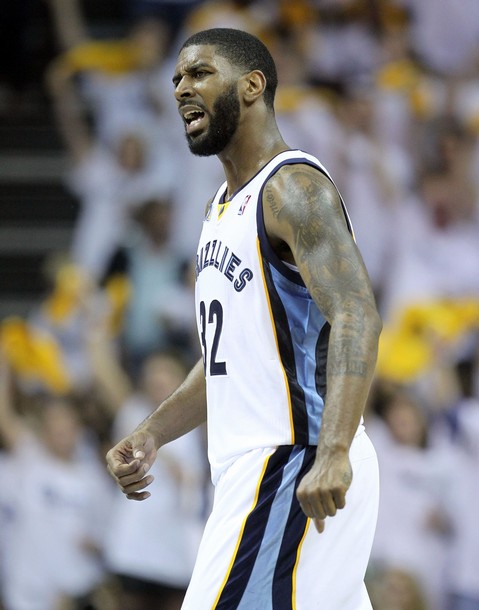
Candidates: Zach Randolph (4 years, $66 million), Rudy Gay (4 years, $68.7 million), Mike Conley (5 years, $40 million), OJ Mayo (1 year, $5.6 million)
Randolph’s long-term deal could be crippling in a couple of years, as you never quite know what’ll happen with Zach. The same can be said for Conley, who may have peaked already. Gay had a great season, but does the Ewing Theory pertain to him and this particular team? Even Tony Allen beat out O.J. Mayo for the starting shooting guard position. And in another way. 
Final Verdict: OJ Mayo
The Grizzlies wouldn’t and shouldn’t release anyone, but if they did, it’d have to be Mayo. Gay and Randolph’s contracts are monstrous, but losing either player would hinder Memphis’ chances of contending in the West. Conley’s contract is a little pricey as well, but he turns into a reasonable bargain when he’s playing his best.
Candidates: Darko Milicic (3 years, $15.7 million), Luke Ridnour (3 years, $12 million), Nikola Pekovic (2 years, $9.3 million)
Too many jokes come to mind with this team. Let’s start with Darko. When was it ever a good idea to pay him this much? He contributed negative $4.4 million last season! Pekovic only contributed negative $4 million. Ridnour was actually severely underpaid, but if you haven’t noticed, Ricky Rubio has arrived, and I’m pretty sure he will be starting right away.
Final Verdict: Luke Ridnour
As bad as Darko and Nikola are, the T-Wolves need centers (everyone else is basically a small forward, power forward or Spanish boy wonder). With Rubio in town, Ridnour is expendable. Simply put, there are cheaper options with similar production on the market.